
Dear CATS Members,

When One Hospital Becomes “Canada’s Hospital”
Earlier this year, our colleagues at the University Health Network unveiled a new brand identity proudly declaring themselves “Canada’s Hospital.” The rebrand celebrates an extraordinary record: the country’s top research hospital for more than a decade and, according to Newsweek, the #2 ranked hospital in the world for yet another year. Those are remarkable achievements, and they deserve recognition.
For thoracic surgeons in Canada, the announcement also carries a sense of familiarity. Many of the founding figures of Canadian thoracic surgery trained in Toronto, and many of our mentors, teachers, and program leaders trace their professional roots back to those halls. In many ways, UHN—and its predecessor Toronto General Hospital —helped shape the DNA of our specialty in this country. The heritage is real, and many of us carry it proudly. But heritage has a funny way of spreading. Those trainees eventually moved across the country, building programs in Vancouver, Calgary, Edmonton, Winnipeg, London, Hamilton, Ottawa, Montreal, Quebec, Halifax, and beyond. The result is a thriving national community of thoracic surgeons who share a common lineage but practice in very different health systems and institutions.
So, when one hospital adopts the title “Canada’s Hospital,” it naturally raises a gentle question for the rest of us: If UHN is Canada’s Hospital, what exactly does that make everyone else? Perhaps the answer is simple. Toronto may have Canada’s Hospital, but the rest of us represent something equally important—Canada’s Thoracic Surgery Network, a community of programs and surgeons built from shared training, mentorship, and collaboration.
In other words, the roots may run through Toronto, but the forest now stretches from coast to coast.
And if the branding continues to evolve, perhaps the next titles will follow naturally:
- Canada’s Operating Room
- Canada’s Waitlist
- Canada’s Chest Tube
Until then, congratulations to our colleagues at UHN on their well-earned recognition. Just remember—if you truly are Canada’s Hospital, you may soon discover that all of Canada’s referrals are on the way.
With warm regards,
Rick Malthaner MD MSc FRCSC FACS
President
Canadian Association of Thoracic Surgeons
Dear CATS Members,
Trust is the foundation of professionalism; permission is not.
Thoracic surgery teaches responsibility through trust, not permission.
Medical education depends on trust, judgment, and professional autonomy. Yet the expanding reach of alcohol approval policies—applied even to voluntary, informal gatherings where learners may be present—signals a shift away from these core values and toward reflexive risk management.
No one disputes the responsibility of institutions like many Universities to ensure safety and professionalism. But requiring institutional approval for private, optional social events simply because learners may attend conflates duty of care with administrative control.
Medical students, residents, and fellows are adults—many already licensed physicians. Treating their presence as an inherent liability diminishes their professional standing and undermines the identity we claim to cultivate. The presumption that faculty-hosted social interactions are inherently coercive or unsafe unless formally sanctioned is neither evidence-based nor respectful.
Power differentials exist, but they are best managed through clear expectations: voluntary participation, no obligation to drink, and inclusive environments. They are not resolved by extending institutional oversight into private social settings. Taken to its logical conclusion, this approach would require approval for conference dinners, retirement celebrations, or any gathering where learners and faculty coexist.
Over-regulation carries unintended consequences. Faculty withdraw from informal mentorship. Learners self-organize without guidance. Collegial spaces contract. Risk is not reduced—it is merely displaced beyond constructive influence.
Professionalism is not enforced—it is modeled. If we cannot trust our learners to participate responsibly in voluntary social settings, we risk replacing professional formation with procedural compliance.
Learner safety matters. So does trust. Good policy must protect both—without confusing governance for professionalism.
Trust is the foundation of professionalism; permission is not.
With warm regards,
Rick Malthaner MD MSc FRCSC FACS
President
Canadian Association of Thoracic Surgeons
Dear CATS Members,
As we begin a new year, I would like to extend my warmest wishes to you and your families for a healthy, fulfilling, and successful 2026.
Thoracic surgery in Canada enters this year at a pivotal moment. Across the country, we are experiencing rising cancer volumes, increasing clinical and technological complexity, evolving training pathways, and an aging workforce—all within health systems under significant and sustained strain. At the same time, many critical decisions affecting our specialty—training capacity, recruitment, operating room access, and regional service delivery—are being made using incomplete or non–specialty-specific data.
As the national voice for thoracic surgery, the Canadian Association of Thoracic Surgeons has a responsibility to ensure that our specialty is accurately represented, proactively planned for, and well positioned to meet the needs of patients and the health system in the years ahead. Achieving this requires high-quality, surgeon-led workforce data that reflects the true realities of thoracic surgical practice in Canada.
In 2026, CATS will undertake a comprehensive Canadian Thoracic Surgery Workforce Survey to better understand who we are, how we practice, and what will be required to sustain excellence in thoracic surgical care across the country. This initiative is not simply about counting surgeons—it is about shaping our future. The insights gained will inform training models, support equitable access to care, guide recruitment and succession planning, and strengthen our engagement with national partners and decision-makers.
I strongly encourage all members to engage with this important work—by participating in the survey and by contributing to the Workforce Working Group that will guide its development, analysis, and reporting. Your experience, perspective, and insight are essential to ensuring that this effort reflects the diversity and complexity of practice across Canada.
Thank you for your continued commitment to CATS and, most importantly, to the care of our patients. I look forward to working together in the year ahead as we help define—and secure—the future of thoracic surgery in Canada.
With warm regards,
Rick Malthaner MD MSc FRCSC FACS
President
Canadian Association of Thoracic Surgeons
“’Tis the Season of Giving… or Is It?” 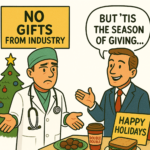
As we head into the holiday season, a time traditionally filled with generosity, gratitude, and yes—chocolate—I find myself reflecting on a recent conversation from my administration. I was reminded that “lunch and learn” sessions are considered against corporate policy at our institution. No more educational free lunches. No more double-doubles. No more festive gift baskets quietly appearing in clinics.
I understand the reasoning. We all do. It’s the well-worn argument about the slippery slope—that even a cup of coffee, a sandwich, or a small holiday gift from industry could subtly influence our choice of stapler, chest drain, robot, or the next trip to the “ Surgi-tech innovation centre” we’re flown to after signing a 14-page NDA.
But as thoracic surgeons, are we really that naïve?
I’d like to believe we are smarter than the idea that a free latte or a small box of chocolates will sway our clinical judgment, research agenda, or operative decision-making. We are stewards of patient care, leaders in our hospitals, and thoughtful partners in innovation—far more resilient than the blatant persuasion of pastries and swag.
The truth is simple: industry needs us, and we need industry.
Every major advancement in thoracic surgery has come from collaboration—not coercion. Robotics, endoscopic platforms, stapling technology, energy devices, digital drains, imaging systems—all of it exists because surgeons and industry worked together. Responsibly.
So perhaps there is room for a sensible middle ground.
Perhaps a Canadian Double-Double is acceptable—so long as it’s acknowledged, disclosed, and understood for what it is: not influence, but hospitality. A gesture. A seasonal courtesy, not a conflict.
After all, ’tis the season of giving.
So while CATS fully supports ethical collaboration and transparency, perhaps we don’t need to turn away every small holiday gesture with Scrooge-like suspicion.
Let them eat cake.
Let them eat chocolate.
At least during this season of warmth, generosity, and gratitude.
On behalf of the Canadian Association of Thoracic Surgeons, I wish all of you a joyful, safe, and restorative holiday season. Thank you for your dedication, integrity, and the remarkable work you do for patients across Canada.
Happy Holidays — and may your coffee be disclosed but never denied.
Rick Malthaner MD, MSc, FRCSC, FACS
President, Canadian Association of Thoracic Surgeons
President’s Message – No More Jacks!
Canadian Association of Thoracic Surgeons
Dear Colleagues,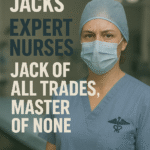
As we continue to advance thoracic surgery in Canada, I am struck by how much our field depends not only on surgical skill, but on the strength and stability of the teams that surround us. Thoracic surgery, perhaps more than many specialties, relies on precision, rhythm, and trust in the operating room — all of which are cultivated through familiarity and shared experience.
Yet increasingly, we are witnessing a trend toward rotating operating room nurses across multiple specialties, often driven by staffing pressures and administrative efforts to promote flexibility. While understandable from a systems-management standpoint, this approach comes at a cost that cannot be ignored.
Thoracic surgery is a technically demanding field. The nuances of lung isolation, chest wall reconstruction, esophageal procedures, and minimally invasive thoracic techniques are not easily generalized. When our scrub and circulating nurses are frequently reassigned, the continuity and specialized expertise that underpin safe, efficient thoracic surgery are eroded. The result is a team of Jack-of-all-trades but master of none — a situation that serves neither patients nor professionals well.
A stable, dedicated thoracic OR team is not a luxury; it is a requirement for excellence and safety. The best surgical outcomes occur when each member of the team anticipates the next step, communicates seamlessly, and understands the unique challenges of our procedures. This cohesion cannot be replicated through rotation or periodic exposure.
As an Association, we must advocate for models of care that value specialization and team consistency. Investing in dedicated thoracic nursing teams fosters expertise, improves efficiency, and strengthens morale — benefits that extend far beyond the operating room.
I invite our members to speak openly about this issue within their institutions and to share data and experience that highlight the tangible impact of nursing stability on patient outcomes. If we are to maintain Canada’s reputation for excellence in thoracic surgery, we must also defend the structures that make such excellence possible.
So, as we look ahead, let’s make our position clear — for the sake of our patients, our teams, and our craft: No More Jacks!
Rick Malthaner MD, MSc, FRCSC, FACS
President, Canadian Association of Thoracic Surgeons
Dear Colleagues,
I am deeply honored to assume the role of President of the Canadian Association of Thoracic Surgeons (CATS). It is a privilege to represent such a dedicated and talented community of surgeons who work tirelessly to provide life-saving care to patients across Canada.
We are facing an unprecedented crisis in our health care system—one that impacts not only thoracic surgeons but, most importantly, the patients who depend on timely access to specialized care. Surgical backlogs, resource constraints, and workforce challenges threaten the quality and accessibility of thoracic surgery in our country. These issues demand urgent attention and collective action.
As President, I am committed to leading CATS with transparency, collaboration, and advocacy. Together, we will work to ensure that the voices of thoracic surgeons are heard at every level of decision-making and that patient care remains at the heart of every conversation. Our priorities will include strengthening our workforce, improving access to care, and advancing innovation and education in thoracic surgery.
This is a pivotal moment for our profession and for Canadian health care. I invite all members to engage actively as we navigate these challenges and shape a stronger future for thoracic surgery in Canada.
Thank you for your trust and support. I look forward to working with all of you in the months ahead.
Rick Malthaner MD, MSc, FRCSC, FACS
President, Canadian Association of Thoracic Surgeons
As our annual meeting approaches and I look forward to seeing many of you in Montreal, I wanted to take the opportunity to thank you for the privilege of serving as part of the organization’s leadership group and working alongside our outstanding executive.
It has been the honour of my leadership career to have been president of CATS for the last 2 years and I thank all of you for your support.
I wish Rick Malthaner all the best as he prepares to take over as president next week – CATS will be in excellent hands.
See you soon,
John
CATS President
Spring is arriving and we are starting to see a bit of green. COVID restrictions are lifting but undoubtedly we will see increasing numbers in our hospitals again. It has been an incredible burden on our health care system, on our patients who have been waiting for surgery and on ourselves as we have been isolated from family and friends. We know that rates of mental illness have gone up over the pandemic and I think this should remind us of the importance of human connection. We are social beings. We need each other. But our patients need us too. Even though virtual visits are incredibly efficient, we, and our patients, lose out on the human connection. Trust is so important in surgery. Despite the long explanation of risks and benefits of surgery, the patient must put their trust in us. Trust is built on human connection.
Wishing you all a wonderful spring.
Gail
We are approaching the end of the COVID pandemic and moving to the “endemic” phase. It has been a long journey for all of us. Humans are social beings and the isolation from friends and family has been very hard on us. It is through contact with others that we are renewed and reinvigorated. But it is not just the lack of contact with our friends and families that has hurt us. Our isolation from colleagues has also taken a toll but I don’t think this is well recognized. When you think about how much time we spend at work, we actually spend as much or more time with colleagues than our families. Perhaps a sad statement but one that reflects reality for many of us. It is by social interactions that we build relationships and trust: the ability to look someone in the eye, see their facial expression, look at their body language, shake their hand. This is not possible over ZOOM. High functioning teams like thoracic surgery depend on everyone on the team trusting one another. I think that virtual meetings have enabled us to carry on the business of thoracic surgery and undoubtedly will continue to have a place in our lives, but as much as permitted, I encourage you all to find some time to meet face to face with colleagues, share a coffee, discuss a difficult case, or just check in.
Looking forward to spring.
Gail Darling, CATS President

Welcome to another year, another COVID wave.
We will get through this. In the meantime, we will continue to deliver the best care to our patients to the best of our abilities given the restrictions placed upon us. Making a clinical decision is fairly easy for us as this is what we are trained to do. More challenging is managing the anxiety and uncertainty that affects us all but particularly our patients who are waiting for care. The sustained stress on our healthcare system is unprecedented. As surgeons, we are “doers”, head down, one foot in front of the other, do what needs to be done. This approach has served us well during our training and our careers. Indeed it continues to serve us well as we deal with this pandemic.
I hope you will all recognize the stress you are experiencing and the stress experienced by those you work with everyday. Cut yourself some slack, take some “me “ time. We all need this, and can learn from our younger colleagues and students.
CATS is thriving. We have a growing membership, with lots of members with energy and new ideas. They are participating in our committees and bringing a great deal to the table. Our EDI task force is now formally a committee as we recognize the importance of their leadership on this file going forward. Our education, research, best practice, quality and database committees are moving forward with new initiatives and collaboration. I think you will see from the newsletter there is lots going on with lots of educational opportunities for everyone.
The key to a successful and thriving association is participation by our members and a steady hand at the helm and for that I am ever grateful to Jenn Artz who keeps us all on track and moving forward.
Wishing you all a safe and healthy new year. Reach out to me anytime at gail.darling@nshealth.ca.
Gail Darling, CATS President
 Dear CATS Members,
In looking to 2019, I would like to revisit our vision for CATS, and highlight strategic focus over the next couple of years. CATS recently went through a visioning exercise in 2016 and those statements still hold true today. Our vision is to “enable Canadian Thoracic Surgeons to provide the highest level of care to every patient, every time”. To help achieve this, our mission is to form a “collaborative network that promotes excellence in patient centered care, fosters innovation, and enhances quality through education, research and advocacy”. I am very excited to work with you all to pursue these aims, and along with the outstanding CATS Executive, I am keen to build on the solid foundations laid by my predecessors and focus in three main areas: (1) promote CATS as a learning network through shared excellence and experience, (2) further augment involvement of the CATS membership in our activities, and (3) empower leadership among committee chairs.
To promote our network, we have embarked on the CATS National Quality Improvement Database (CATS DB) Project, which is made possible by the remarkably collegial and collaborative nature of CATS members. This requires the coordination of local work across the national arena, and it is a fabulous opportunity for CATS members to learn from each other, as we collectively make a significant impact on patient care. CATS is also working to improve its communications to support this project and further develop the network connecting Canadian thoracic surgeons, while reaching out to our partners internationally. This national data-driven learning network will help us ensure that we are providing the optimal care “to every patient, every time”.
Involvement in CATS can be rewarding personally and professionally. To further augment the involvement of the CATS membership, we are growing our committees and including residents to allow for a variety of perspectives to be present. We are seeking new opportunities to engage the membership, which currently include feedback to the Best Practice Committee on recommendations, comments / endorsements on local positive deviance seminars as part of the CATS DB project, and ways to make the Annual Conference more interactive (e.g., Difficult Case Debates). There are more initiatives on their way, and we encourage you to let us know what you would like to see.
To empower the committee leadership, committee chairs are working to develop their committees in terms of membership and projects. Committees are supported and encouraged to take on new initiatives, and we are looking forward to seeing the innovative ways that we will be sharing research and supporting education in the near future.
I am also excited to continue the great work of CATS leadership of prior years. The legacy of leadership in this organization is inspiring and humbling. Just to name a few recent examples, our organization remains a strong incorporated entity with outstanding governance and financial stability, after Richard Inculet pursued incorporation in 2014. Drew Bethune further strengthened governance, and oversaw the visioning exercise in 2016, very much relevant today as discussed. Sean Grondin has further enhanced our international relationships, and I am excited about further strengthening our international association ties, particularly with STS, in 2019.
As always, I encourage you to reach out to myself or and of the CATS leadership and to get involved in CATS, including Gail Darling (Vice-President), John Dickie (Secretary/Treasurer). We are fortunate to be part of such a collegial and dynamic organization. I am really looking forward to working with each one of you over the coming two years.
Warm regards,
Andrew
Andrew JE Seely
CATS President 2018-2021
 Dear Colleagues,
I would like to take this opportunity to share information about the exciting program that has been put together by the CATS Annual Meeting Program Committee led by James Villeneuve. This year’s meeting will be held at the Delta Hotel and St. John’s Conference Centre (Sept. 14-16, 2018). I would like to acknowledge and thank Paul Gardiner and the local arrangements team for their tremendous assistance. Registration for the meeting and hotel accommodation booking will be available in the spring on the CSF site. The meeting in St John’s will mark our 20th Anniversary as an Association and several celebratory events are planned. A brief summary of the program highlights is outlined below.
Of special note are the two outstanding invited speakers. Mr. Joel Dunning from the James Cook University Hospital (Dr. FG Pearson Lecturer) has pioneered minimally invasive surgical techniques and the development of evidence-based cardiothoracic surgery in the United Kingdom. We are also joined by Dr. Donald Low from The Virginia Mason Medical Center in Seattle WA as the CATS President Visiting Lecturer. Don is a world-renowned foregut surgeon with special interest in enhanced recovery after surgery.
Thursday Sept 13 – For the morning program, Dr Laura Donahoe has developed the CATS Postgraduate course that will review the Top 10 topics in thoracic surgery with a superb teaching faculty assembled. In the afternoon, the CATS Research meeting and the CATS Best Practices committees will be in session. The always popular CATS Cocktail party will be at the Merchant Tavern this year.
Friday Sept 14 – On Friday, the program will begin with a detailed discussion on Enhanced Recovery after Surgery, chaired by Dr. Ferri and featuring an expert panel of discussants. Later in the morning, residents will have the opportunity to meet with Drs. Low and Dunning at the “Brunch with the Professors” meeting. Later, I will present the Presidential address followed by poster presentations over lunch. In the afternoon, the CATS/CAGS joint symposium on foregut disease will occur. We will follow and close the day with the CATS Lung symposia on the screening, management, and follow-up of nodules and early-stage cancers. The 20th anniversary CATS gala dinner will be held at the historic Rooms restaurant on Friday evening. To ensure your seat at this event, please purchase your tickets when registering for the CATS meeting on the CSF site.
Saturday Sept 15 – The Saturday morning begins with the Royal College Gallie lecture, which is being sponsored by CATS this year. We are honored to have as our invited speaker Dr. Doug Mathisen of Harvard University who will be speaking on Stewardship in Surgery. The CATS esophageal symposium will follow, featuring an expert panel on a variety of topics. We will then hear the Dr. FG Pearson lecture presented by Mr. Joel Dunning. Joel will share his experience as a pioneer in minimally invasive surgical techniques. The morning session concludes with the scientific research paper presentations. In the afternoon, the inaugural conjoint STS-CATS symposium will occur. This event promises to be an entertaining and informative session of difficult case presentations and discussions.
As you can see, James and his team have put together a fabulous program agenda. A detailed review of these and other planned activities will be available in March at the CSF website (canadiansurgeryforum.com). I am looking forward to seeing you in St. John’s and marking our 20th anniversary.
Sean
Sean Grondin
CATS President 2016-2018